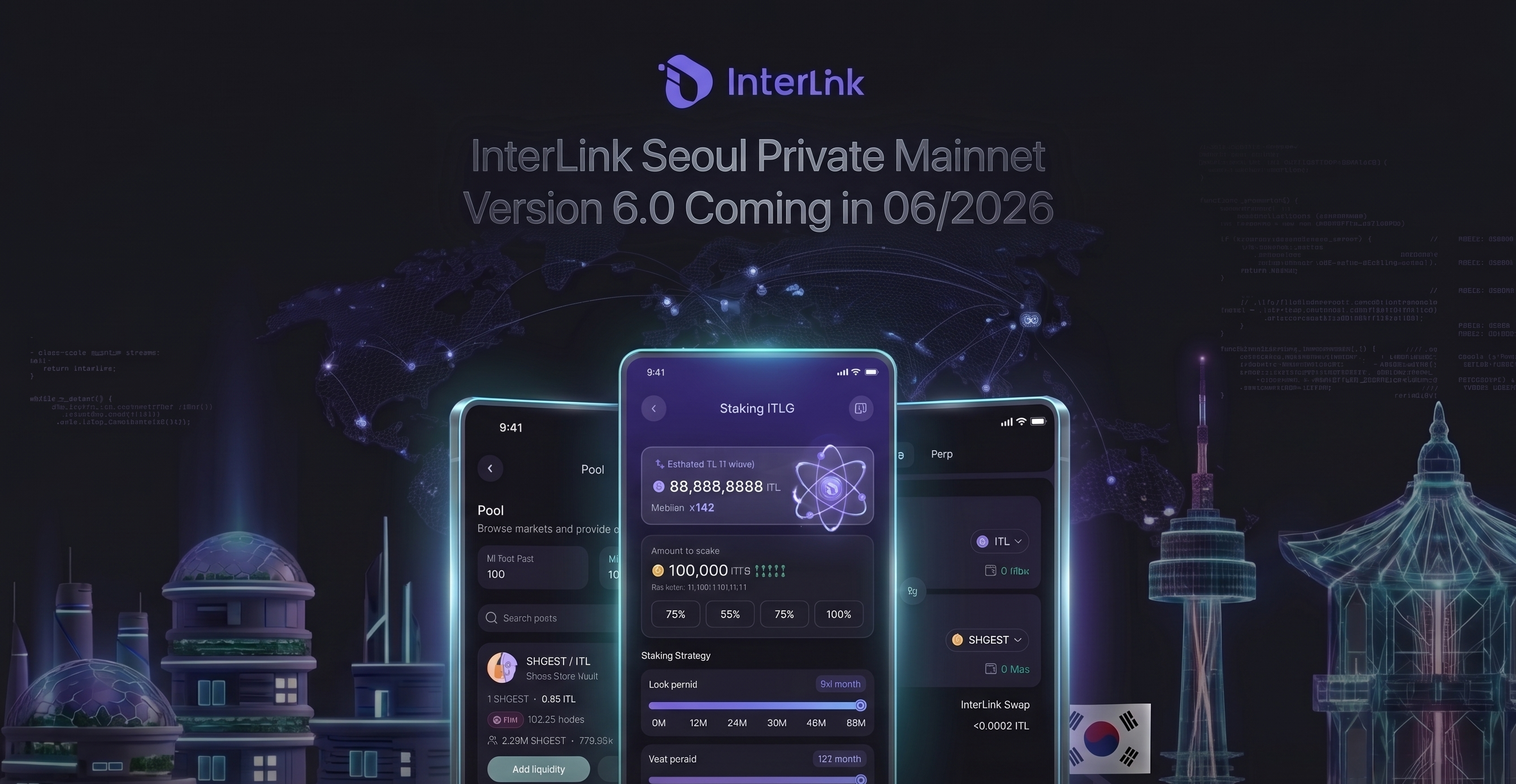
June 2026 will mark a historic turning point for the InterLink ecosystem with the official deployment of InterLink Seoul Private Mainnet V6.0. This is not just a routine upgrade; it represents the official launch of the Mainnet after more than a year of continuous research and development.
According to the development team, all engineers and researchers within the ecosystem are currently fully focused on this crucial milestone to ensure stable operations and alignment with the project’s long-term vision.
Why the Name “Seoul Private Mainnet”?
The name “InterLink Seoul Private Mainnet” was chosen as a tribute to the South Korean community — one of the cornerstone communities driving InterLink’s development.
South Korea once created the “Miracle on the Han River,” transforming itself from a war-torn nation into one of the world’s leading economies. InterLink hopes this spirit will inspire the network itself — evolving from a small project that emerged just over a year ago into one of the blockchains with the largest active user bases globally.
Key Features Launching in V6.0
1. Official Launch of ITLG Staking
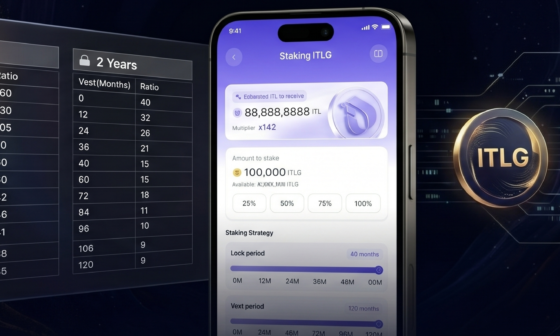
One of the most highly anticipated features, the ITLG staking mechanism, will officially go live based on the formula approved in DAO Proposal #16.
Users will be able to:
- Stake ITLG
- Earn ITL rewards
- Deepen their participation in the ecosystem’s economy
This is a critical step toward building long-term incentive mechanisms for the community.
2. Expansion of the dApp Ecosystem
Following the Mainnet launch, decentralized applications (dApps) will be deployed sequentially on the InterLink Chain.
The project aims to achieve:
- Hundreds of dApps within the first year.
- Expansion across multiple sectors, including payments, commerce, Real-World Assets (RWA), AI, SocialFi, and Web3 Services.
- A utility-driven ecosystem rather than one focused purely on token speculation.
This demonstrates InterLink’s commitment to becoming a blockchain with real-world utility rather than just an experimental Layer-1 network.
3. Transaction-Backed Digital Asset Protocol – A Real-Transaction-Linked Asset Model
One of the most prominent highlights of V6.0 is the introduction of the Transaction-Backed Digital Asset Protocol.
This protocol enables:
- Tokenization of real-world businesses.
- Trading and investing in business activities via the blockchain.
- Generating value flows directly tied to real-world transactions.
According to InterLink Labs, this model could become one of the world’s first systems to bring brick-and-mortar businesses onto the blockchain through a transaction-backed approach. The team also noted that related patents will be disclosed soon.
4. Real-World Payments via InterLink Tokens
Payment Points utilizing InterLink Tokens will begin rollout.
Users will be able to:
- Pay for goods.
- Utilize real-world services.
- Integrate the token into daily life.
If successfully scaled, this will be a massive leap forward in establishing InterLink as a global-scale Web3 payment network.
5. Validator Staking and Network Security
In the subsequent phase, users will be able to:
- Stake with validators.
- Support network security.
- Earn additional rewards from validation activities.
This brings InterLink closer to a fully decentralized blockchain model.
Asset Distribution Model Compared to Early-Stage Bitcoin
InterLink views its Users and Human Nodes as the pioneering asset holders within the ecosystem. This model draws parallels to the early days of Bitcoin:
- When digital assets belonged primarily to individual community members.
- Before being dominated or controlled by large financial institutions.
A Lesson from Bitcoin: The team highlighted that as treasury companies entered the space, BTC supply gradually concentrated into institutional hands, diluting retail ownership over time.
During the Private Mainnet phase, InterLink Labs announced they will unveil several new treasury companies that have registered to join the ecosystem since December last year.
InterLink Initiates Research into Quantum-Resistant Computing
In another notable update, InterLink will begin testing Post-Quantum Signatures.
Against the backdrop of rapid advancements in AI and quantum computing, the research team is developing quantum-resistant cryptographic methods designed to:
- Enhance security.
- Ensure future-proof attack resistance.
- Balance network performance with robust security.
This strategic direction indicates that InterLink is already preparing for next-generation blockchain standards.
InterLink Invites Top Builders to Join the Ecosystem
The InterLink team expressed their strong desire to attract more:
- Blockchain engineers
- AI researchers
- Web3 developers
- Global builders
to continue building the InterLink Chain during this upcoming expansion phase.
The project emphasizes that they maintain a spirit of being humble, open-minded, and ready to collaborate with new talent.
A Major Milestone for InterLink
InterLink Seoul Private Mainnet V6.0 is more than just a technical upgrade; it is the launchpad for an ambitious vision to build:
- A large-scale Web3 payment network.
- A global RWA ecosystem.
- A blockchain with powerful, practical real-world applications.
If everything progresses according to the roadmap, this could stand as one of the most defining chapters in InterLink’s history. In the future, the community will likely look back at this moment as a time when everyone braved challenges and shared triumphs together to build a thriving ecosystem.